
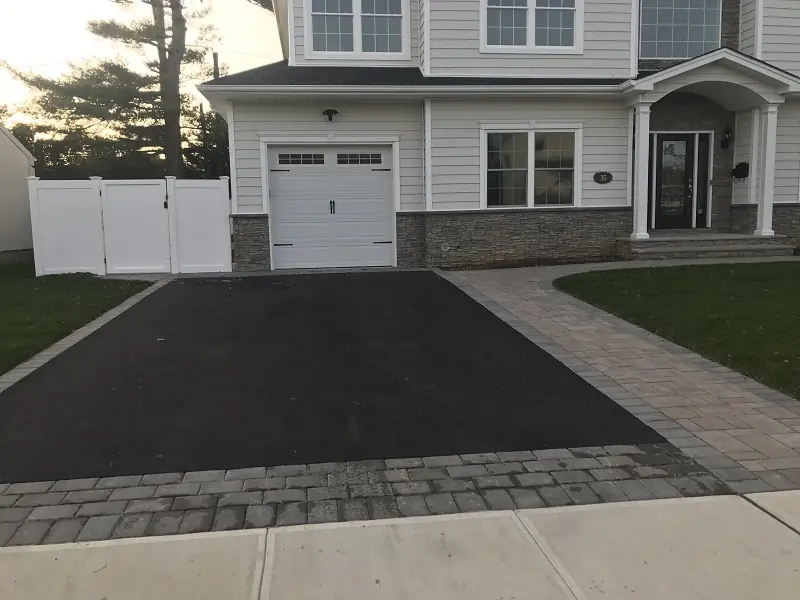
Why Paver Patios and Driveways Fail on Long Island (and How to Build One That Doesn't)
Sunken pavers are a base problem, not a paver problem. What proper excavation, compaction and pitch look like on a Nassau or Suffolk job.
Cabinetry, counters, mechanicals and permits — where the money actually goes in a Nassau or Suffolk County kitchen, and what separates a $45k kitchen from a $140k one.
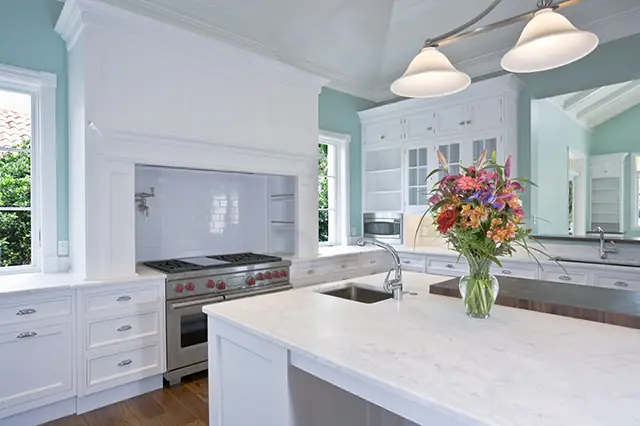
Kitchen pricing on Long Island confuses homeowners because two quotes for the 'same' kitchen can differ by fifty thousand dollars and both can be honest. The difference is almost never the cabinet doors. It is what happens behind the walls, how much of the existing layout survives, and whether the contractor priced the work that a permit set will eventually force. Here is how we build a kitchen number, in the same order we build the kitchen.
Most Nassau and Suffolk kitchens we build fall into one of three bands. The band is set mainly by whether walls and mechanicals move, not by finish level.
On a typical $95,000 gut kitchen we build, cabinetry and installation is the largest single line at roughly 30 to 35 percent. Countertops and backsplash land near 10 percent. Appliances, which homeowners buy themselves as often as not, run 10 to 15 percent. The work most people never see — demolition, framing corrections, electrical, plumbing, HVAC adjustments, drywall and finish carpentry — is usually 30 percent or more.
That last category is where bids diverge. A contractor who has not opened a 1960s Levitt-era wall in Hicksville will not have priced the knob-and-tube branch circuit, the undersized panel, or the cast-iron waste line that has to be cut and transitioned. We price those as line items instead of burying them in a lump sum, so when they appear the budget does not move.
Electrical and plumbing changes, wall removal and any change to the building envelope require a permit in Nassau and Suffolk townships. Permit timelines vary widely by town, and the plan-review step is the part homeowners underestimate. We build permit time into the schedule up front rather than starting demolition and hoping the paperwork catches up.
Skipping the permit is the single most expensive shortcut in remodeling. It reappears at resale, when a buyer's attorney asks for the certificate of completion and the closing stalls until the work is legalized — often at a higher cost than doing it correctly the first time.
Put the quotes side by side and look for the same five things: allowance amounts, who supplies appliances, whether electrical upgrades are included or excluded, how change orders are priced, and the payment schedule. A low bid with a $6,000 cabinet allowance and a high bid with a $22,000 cabinet allowance are not competing — they are describing different kitchens.
Ask each contractor what they expect to find when the walls open, and what happens to the price if they find it. The useful answer is specific.
A same-footprint refresh usually runs four to six weeks on site. A full gut with relocated plumbing and electrical is typically eight to twelve weeks once materials are on hand. Cabinetry lead time, not labor, is the most common cause of delay, so we order cabinets before demolition starts.
If you are moving plumbing or electrical, removing a wall, or changing the structure, yes. Cosmetic work like replacing cabinet doors and countertops in place generally does not require one. We pull and manage the permits for the work we perform.
A well-built kitchen is consistently one of the strongest returns in a Nassau or Suffolk home, largely because buyers price the kitchen before anything else. Permitted, documented work protects that value at closing; unpermitted work reduces it.
Most of our clients do. We set up a temporary kitchen area, dust-protect the work zone, and keep at least one bathroom and the main entry clear throughout.
Sunken pavers are a base problem, not a paver problem. What proper excavation, compaction and pitch look like on a Nassau or Suffolk job.
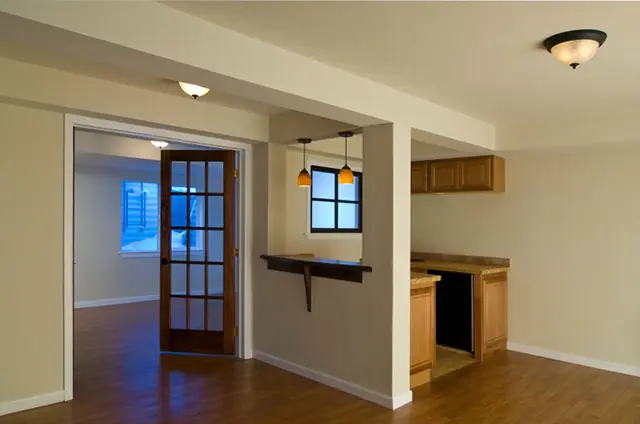
The three things that decide whether a finished basement is an asset or a liability: water, egress and paperwork.
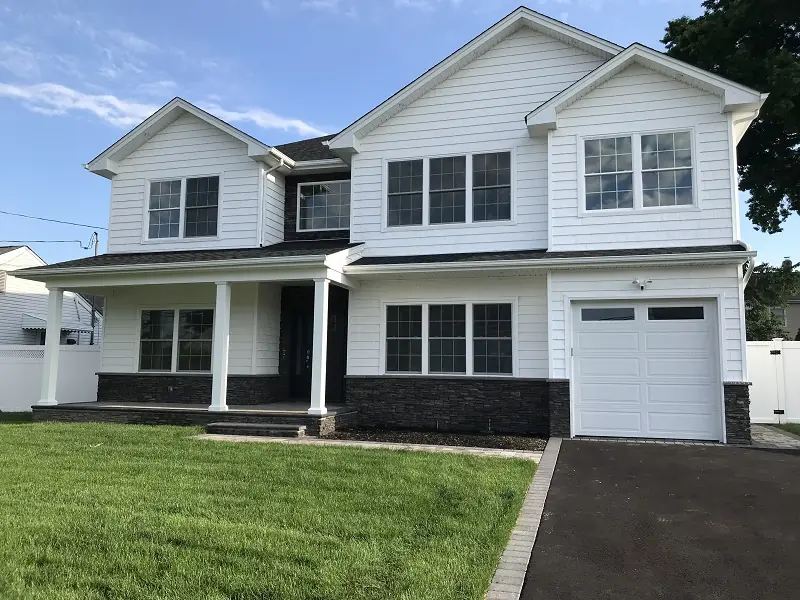
Going up is usually cheaper than going out — until it isn't. How to tell which way your house wants to grow.
Free on-site estimate across Nassau and Suffolk County — we'll walk the space and put a real scope in writing.