
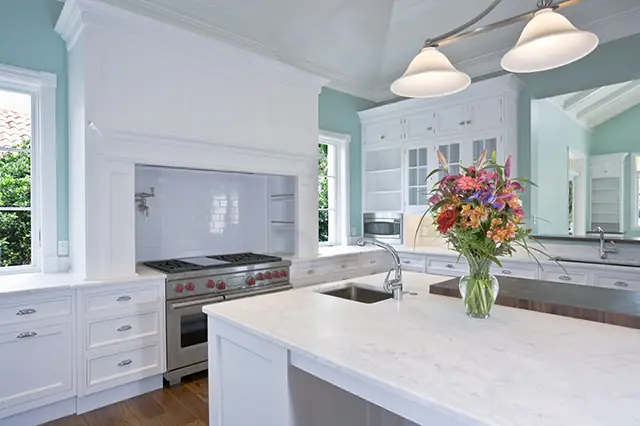
What a Kitchen Remodel Really Costs on Long Island
Cabinetry, counters, mechanicals and permits — where the money actually goes in a Nassau or Suffolk County kitchen, and what separates a $45k kitchen from a $140k one.
Sunken pavers are a base problem, not a paver problem. What proper excavation, compaction and pitch look like on a Nassau or Suffolk job.
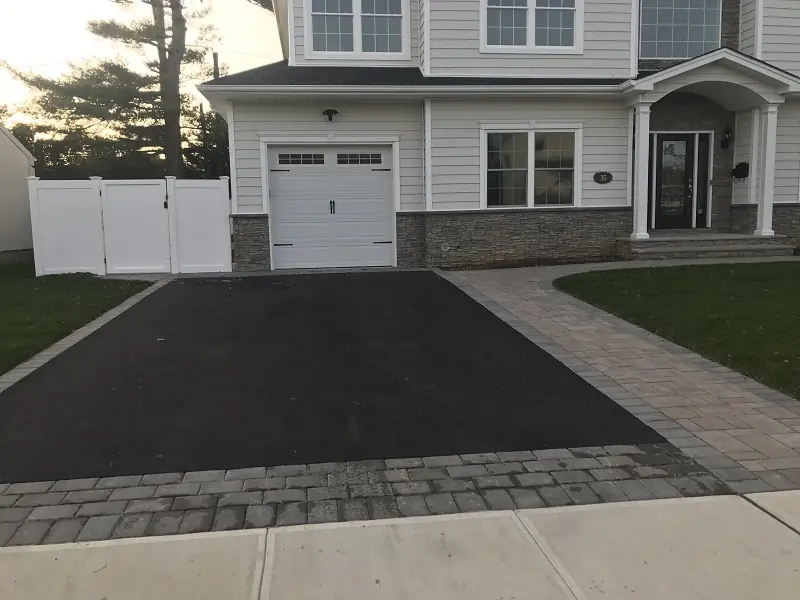
When a homeowner calls us about a three-year-old paver driveway with a dip near the garage apron, the pavers are almost always fine. What failed is underneath them. Long Island soil, a high water table in much of Suffolk, and a winter that cycles above and below freezing dozens of times will find every shortcut in a base within a few seasons.
A paver is a wear surface. The structure is the compacted aggregate beneath it. For a walkway or patio we over-excavate and build a compacted stone base; for a driveway that carries vehicle loads, that base is substantially deeper because the load path is completely different.
The critical detail is not depth alone, it is compaction in lifts. Dumping the full depth of stone and running a plate compactor over the top compacts the top few inches and leaves the rest loose. We place and compact in shallow lifts so the entire section is dense, then screed the bedding layer to a consistent thickness — not thicker in the low spots to fake a level surface, which is how ruts form.
Every exterior surface we build is planned around where water goes. A patio pitched back toward the house sends runoff into the foundation. A driveway with no pitch holds water that freezes, expands and lifts the field. A retaining wall without drainage behind it becomes a dam holding saturated soil.
So the drainage plan comes before the material selection: pitch away from the structure, drainage aggregate and weep provisions behind retaining walls, and a drywell where the yard has nowhere to send the volume. On several Holbrook and Plainview properties we have installed drywells as part of a driveway job specifically because the existing grade sent everything toward the garage slab.
Pavers spread outward at the perimeter unless they are restrained. Edge restraint spiked into the compacted base is what keeps the field tight; without it, the outer courses migrate and the joints open, which lets the bedding layer wash out from below.
Polymeric joint sand, properly installed and activated, locks the field and resists weeds and washout. It is a finishing step people rush at the end of a long job, and it is worth the extra half-day.
Four questions separate a durable installation from a pretty one.
A properly excavated, compacted and drained paver driveway should perform for decades, and individual pavers can be lifted and reset if a utility cut or settlement occurs. The installations that fail in three to five years almost always had an under-built or poorly compacted base.
Both work when built correctly. Pavers flex with ground movement and can be repaired in sections; poured concrete is a monolithic surface that is faster to install but cracks along its own lines. The right choice usually depends on drainage, slope and the look you want.
You need one when the new impervious surface sends more water somewhere the yard cannot absorb it, or when the existing grade pushes runoff toward the house. We evaluate that during the site walk rather than after the first heavy rain.
Sometimes, but only when the concrete is sound, properly pitched and drains. If the slab is cracked or holding water, overlaying it just moves the problem up two inches.
Cabinetry, counters, mechanicals and permits — where the money actually goes in a Nassau or Suffolk County kitchen, and what separates a $45k kitchen from a $140k one.
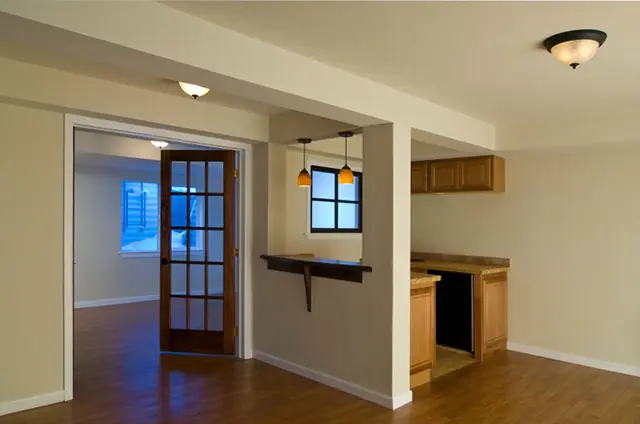
The three things that decide whether a finished basement is an asset or a liability: water, egress and paperwork.
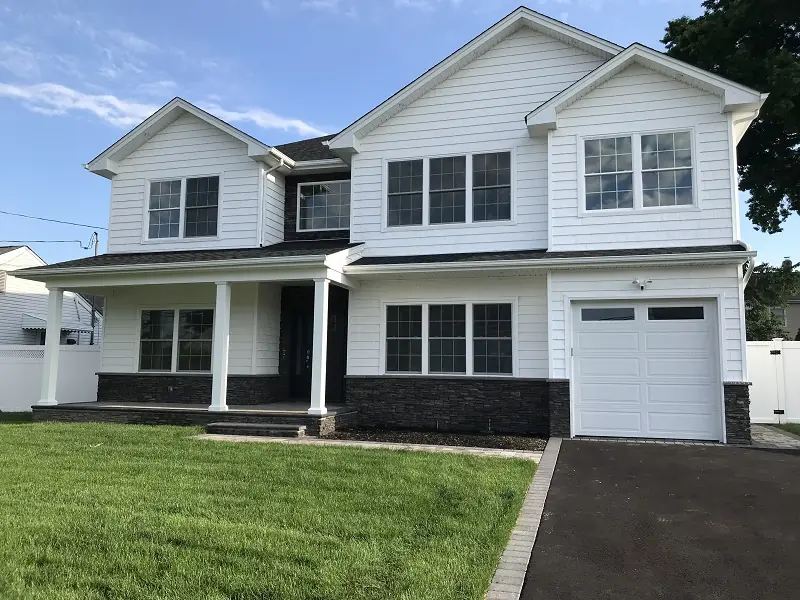
Going up is usually cheaper than going out — until it isn't. How to tell which way your house wants to grow.
Free on-site estimate across Nassau and Suffolk County — we'll walk the space and put a real scope in writing.